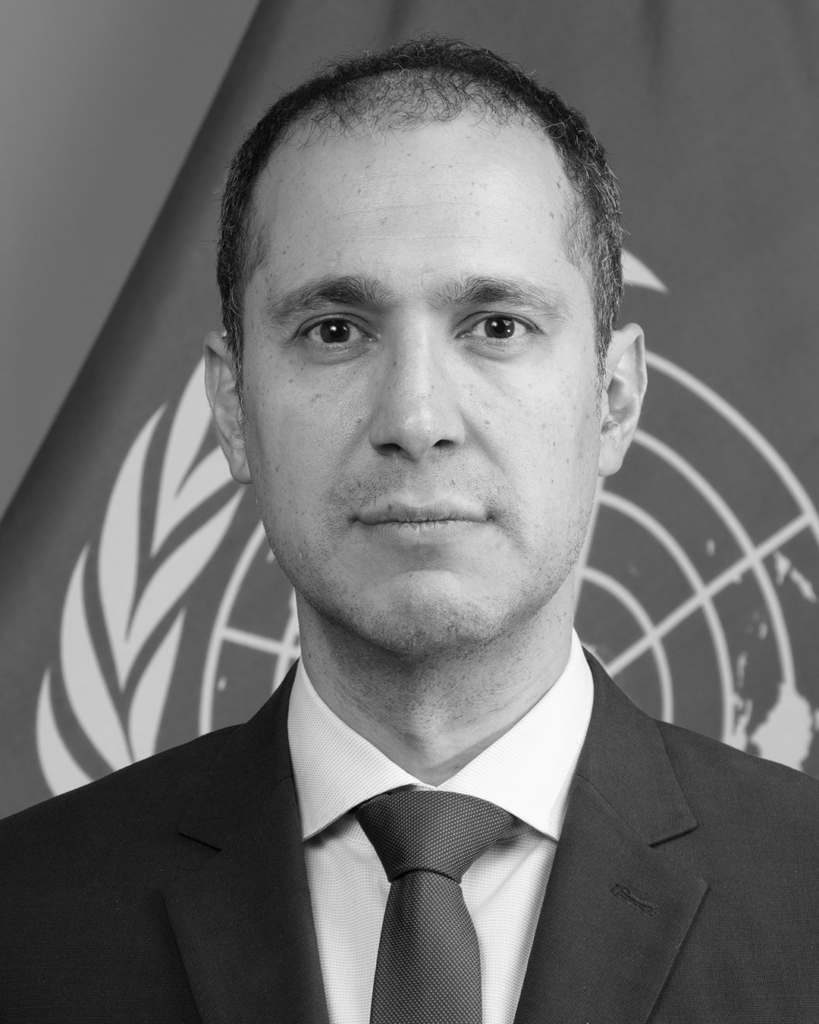
Kaveh Madani
Kaveh Madani is a leading water systems scientist and global environmental policy expert, currently serving as Director of the United Nations University Institute for Water, Environment and Health (UNU-INWEH), the UN’s dedicated think tank on water.
He is widely recognized for his interdisciplinary approach, combining complex systems modelling, risk analysis, economics, and environmental science to address the interconnected challenges of water, energy, food security, climate change, and global stability. His work emphasizes how these domains function as a single integrated system shaping human and ecological resilience.
Throughout his career, Madani has held senior roles in environmental governance, including positions within Iran’s Department of Environment and leadership responsibilities within the UN Environment Assembly Bureau, contributing to international environmental diplomacy and policy processes.
He is also known as a clear and influential communicator on the nature of modern water crises. He argues that water scarcity is no longer a temporary or cyclical shock, but a structural and persistent condition that is reshaping cities, economies, food systems, and geopolitical security.
His recent UN report, Global Water Bankruptcy: Living Beyond Our Hydrological Means in the Post-Crisis Era (UNU-INWEH, 2026), introduces the concept of “water bankruptcy.” It argues that many river basins and aquifers are no longer returning to historical equilibrium, turning droughts, scarcity, and pollution into chronic conditions.
The report calls for a paradigm shift from crisis response to “bankruptcy-style” management: transparent water accounting, enforceable limits on water use, and the protection of natural water capital such as aquifers, wetlands, rivers, soils, and glaciers, with a strong focus on equity.
Madani’s work reframes water not as a sectoral issue, but as the operating system of planetary resilience, underpinning cities, economies, and long-term global sustainability.