PLANET AQUA CITY AWARDS
Recognising cities leading the future of water resilience
/ Application deadline: 30 april 2026
Water is at the heart of the climate challenge
2026 winners
CATEGORY: Frontline Protection
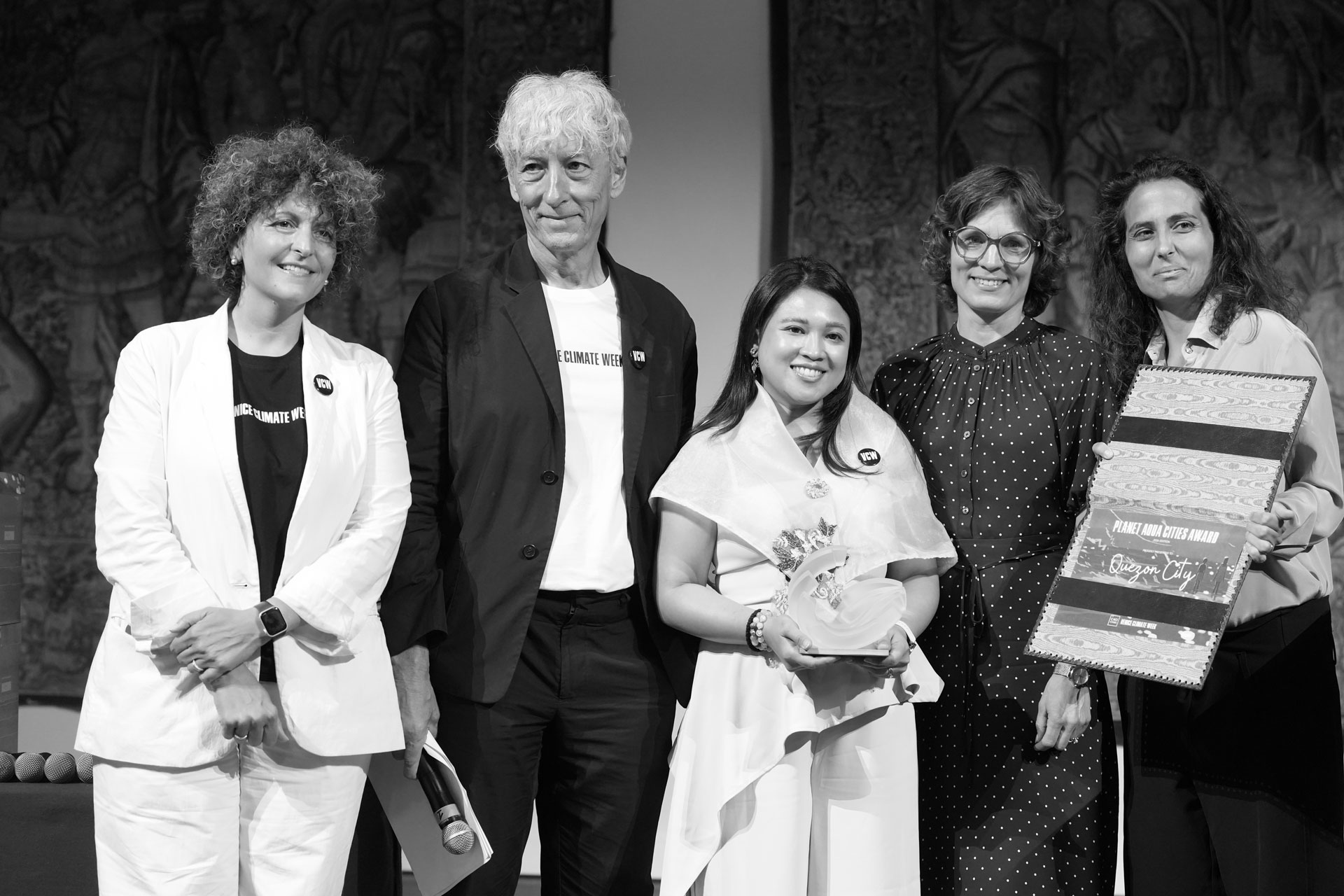
QUEZON CITY, PHILIPPINES
IRISE UP: INTELLIGENT, RESILIENT AND INTEGRATED SYSTEMS FOR THE URBAN POPULATION
READ MORE
Quezon City is redefining what it means to protect a city from the frontlines of climate risk. Its iRISE UP programme combines automated flood sensors, rain gauges, and smart weather cameras with AI predictive modelling to deliver hyper-local early warnings across 142 barangaysm translating complex data into life-saving community action in real time. What makes this project truly exceptional is how it bridges cutting-edge technology with grassroots engagement, ensuring that the most vulnerable residents are not just warned, but equipped to act. iRISE UP is a landmark example of what city-led climate protection looks like in practice.
CATEGORY: Equitable Universal Access
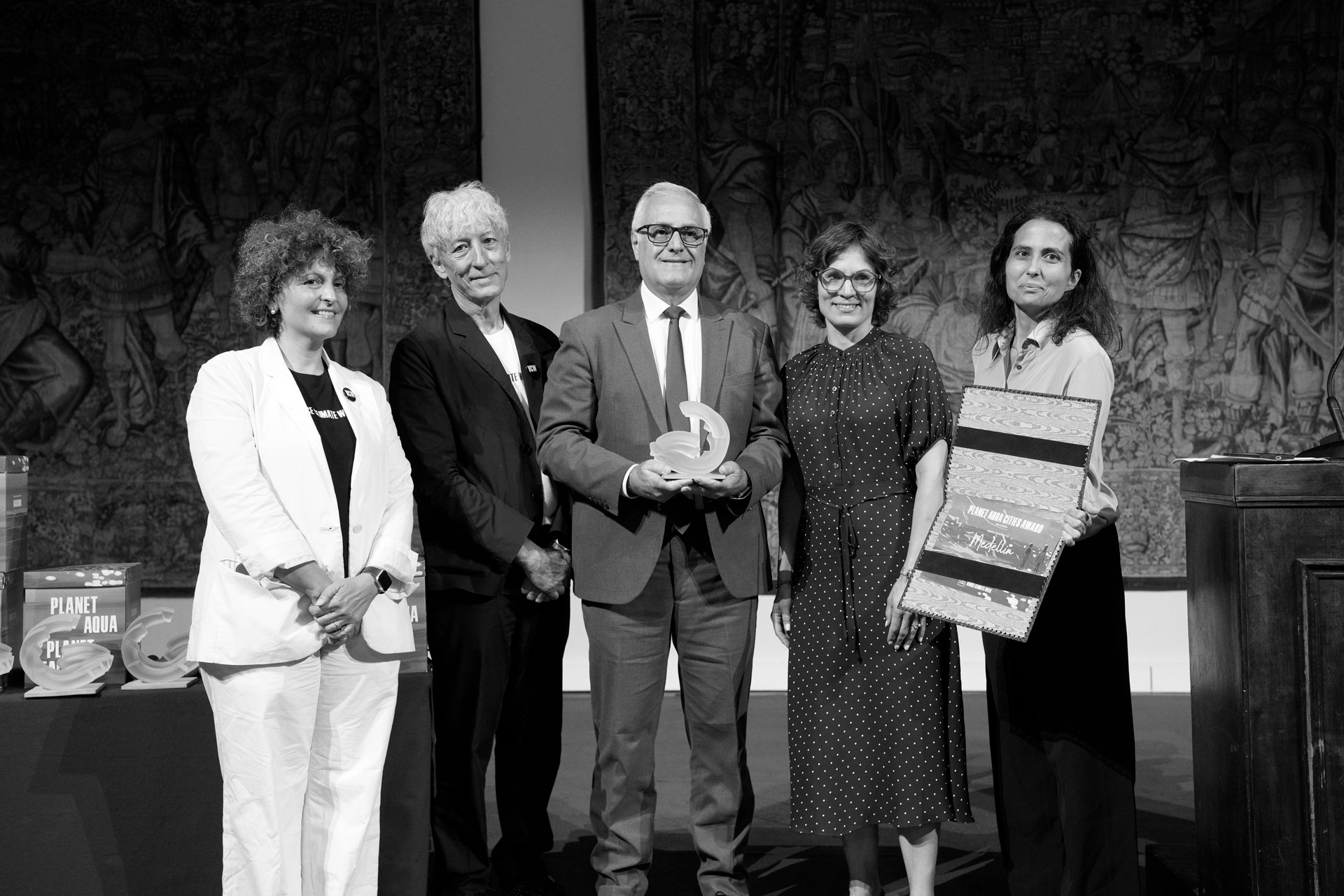
MEDELLÍN, COLOMBIA
UNIDOS POR EL AGUA (UNITED FOR WATER ACCESS)
READ MORE
Medellín has long been celebrated for its urban innovation, and Unidos por el Agua is another reason why. This ambitious programme is closing one of the most fundamental gaps in the city: safe, reliable water and sanitation access for low-income households in hard-to-reach communities across socioeconomic strata 1, 2, and 3 through three intervention lines: household connections, community-based non-conventional water supply, and housing enablement. The programme pairs technical infrastructure with community education and social processes, building shared responsibility for long-term water sustainability. It prioritises hard-to-reach and underserved areas, demonstrating that equitable water access is both a development imperative and a foundational act of climate resilience.
CATEGORY: FLOODING
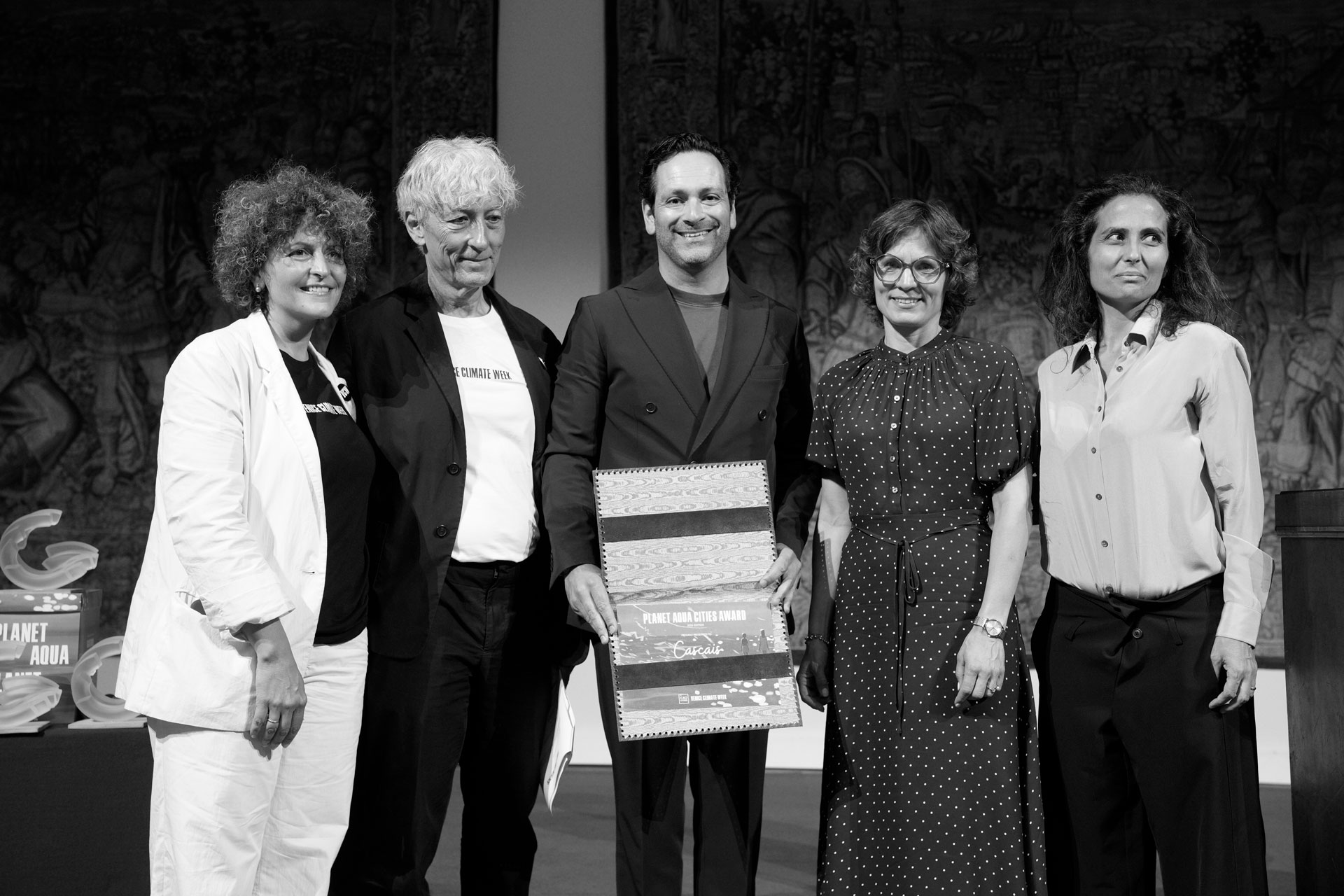
CASCAIS, PORTUGAL
FLOOD SMART STREAM: REHABILITATION AND RENATURALIZATION OF SASSOEIROS' STREAM
READ MORE
Cascais has turned a flood-threatened stream into something extraordinary. The Sassoeiros project eliminates 100% of flood risk along the watercourse through four nature-based flow-damping basins with 80,000 m³ of storage capacity, but what makes it genuinely innovative is what those basins become when the rain stops: vibrant leisure spaces for residents. Add 14 hectares of renaturalised green infrastructure, the eradication of invasive species, and 4.6 kilometres of new pedestrian and cycle paths, and you have a project that has transformed a liability into a community asset. Already recognised by the Council of European Municipalities and Regions, it is a masterclass in what nature-based flood resilience can achieve.
CATEGORY: COASTAL AND DELTA
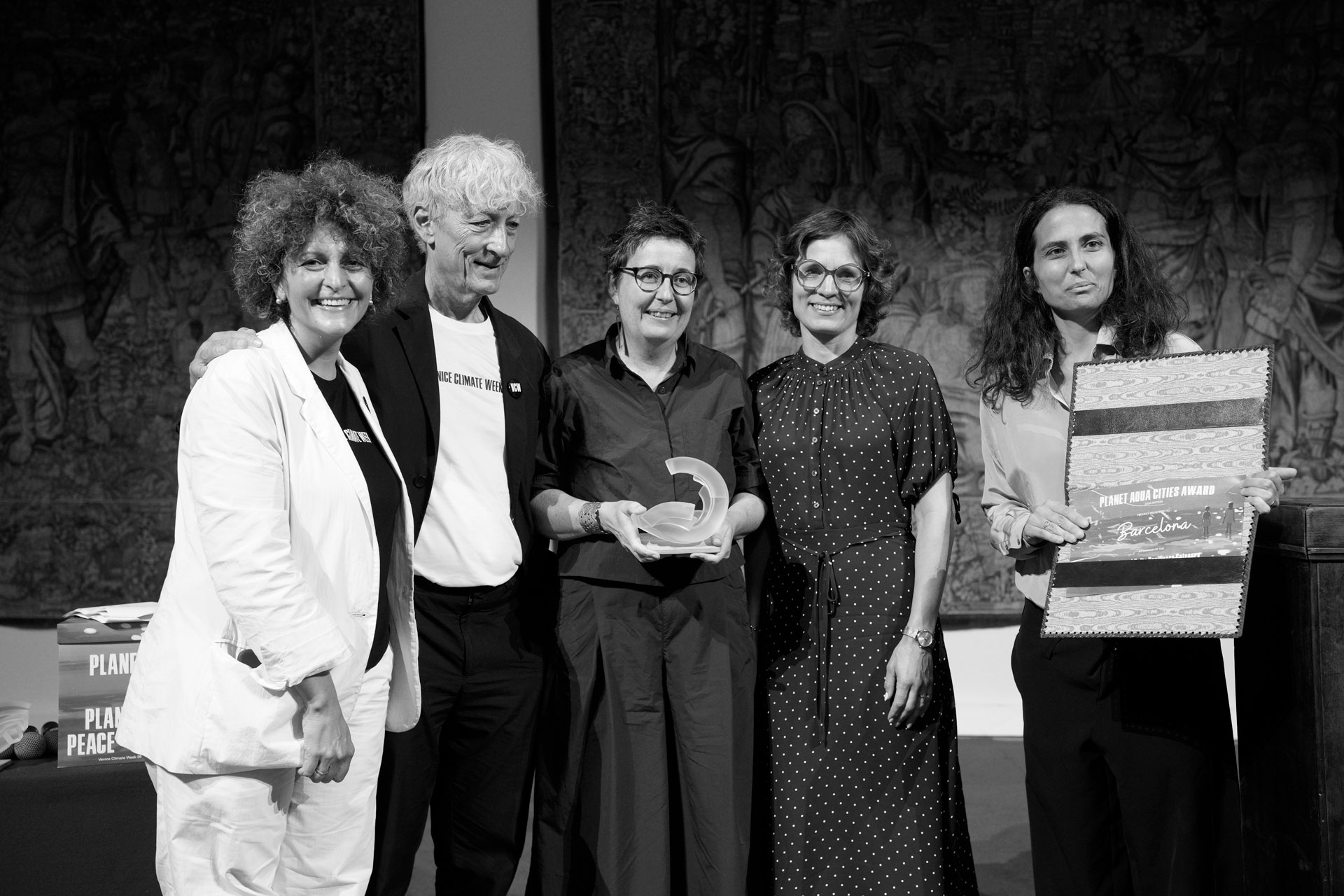
BARCELONA, SPAIN
BARCELONA COASTAL RESILIENCE STRATEGY - FRONT LITORAL TRANSFORMATION
READ MORE
Barcelona is re-making its relationship with the sea – and doing it beautifully. The Front Litoral transformation is creating a continuous 7-kilometre climate-resilient waterfront across the Mar Bella, Bac de Roda, and Llevant beaches, covering 18.5 hectares including a 12.7-hectare marine platform. What makes this project a benchmark for the world is its refusal to treat climate defence and public life as competing priorities: green infrastructure, sustainable drainage, and increased biodiversity are woven into spaces that residents will actually want to use. Barcelona is proving that protecting a coastline and enriching a city are the same act.
WHY THE PLANET AQUA AWARDS
The Planet Aqua City Awards recognise cities that are demonstrating leadership in this transformation. Through this initiative, Venice Climate Week seeks to create a global platform for cities committed to protecting water systems and building climate-safe futures.
celebrate innovative and impactful urban projects
encourage peer learning and knowledge sharing among cities
inspire replication of successful solutions worldwide
strengthen international collaboration on water resilience
AWARD CATEGORIES
Frontline Protection
Equitable Universal Access
Flood Protection
Coastal and Delta Resilience
THE FINALISTS
FRONTLINE PROTECTION
QUEZON CITY, PHILIPPINES
IRISE UP: INTELLIGENT, RESILIENT AND INTEGRATED SYSTEMS FOR THE URBAN POPULATION
Quezon City is redefining what it means to protect a city from the frontlines of climate risk. Its iRISE UP programme combines automated flood sensors, rain gauges, and smart weather cameras with AI predictive modelling to deliver hyper-local early warnings across 142 barangaysm translating complex data into life-saving community action in real time. What makes this project truly exceptional is how it bridges cutting-edge technology with grassroots engagement, ensuring that the most vulnerable residents are not just warned, but equipped to act. iRISE UP is a landmark example of what city-led climate protection looks like in practice.
FUZHOU, CHINA
URBAN WATER SYSTEM SCIENTIFIC DISPATCH SYSTEM
Fuzhou has built something remarkable: China’s first municipal-level integrated flood warning platform, protecting over three million residents from the compounding threats of typhoons, mountain torrents, and tidal backflows. Its elegantly named “Eyes, Brain, and Hands” architecture – combining thousands of IoT sensors with AI hydrodynamic modelling to orchestrate over 1,000 automated assets – is as innovative as it is effective. Crucially, Fuzhou didn’t just build new technology; it solved departmental silos through a unified Joint Dispatching Centre, proving that governance transformation is just as important as technical innovation. The result: a city that once flooded chronically now withstands record-breaking storms.
FORTALEZA, BRAZIL
FORTALEZA CLIMATE RISK OBSERVATORY
Fortaleza has quietly built one of Brazil’s most innovative climate tools and it is already saving lives. Operational since September 2025, the Climate Risk Observatory is a georeferenced platform drawing on ten real-time weather stations to enable precise microclimate analysis and faster Civil Defence responses to flooding and heat. What stands out is how seamlessly it has been embedded into municipal policy – this is not a standalone tech project but a genuine shift in how the city governs climate risk. Lean, scalable, and already proving its impact, it is a model other cities should be watching closely.
EQUITABLE ACCESS
MEDELLÍN, COLOMBIA
UNIDOS POR EL AGUA (UNITED FOR WATER ACCESS)
Medellín has long been celebrated for its urban innovation, and Unidos por el Agua is another reason why. This ambitious programme is closing one of the most fundamental gaps in the city: safe, reliable water and sanitation access for low-income households in hard-to-reach communities across socioeconomic strata 1, 2, and 3 through three intervention lines: household connections, community-based non-conventional water supply, and housing enablement. The programme pairs technical infrastructure with community education and social processes, building shared responsibility for long-term water sustainability. It prioritises hard-to-reach and underserved areas, demonstrating that equitable water access is both a development imperative and a foundational act of climate resilience.
CASCAIS, PORTUGAL
WATER RESILIENCE PROGRAMME FOR SCHOOL AND SPORTS FACILITIES
Cascais has found an ingenious entry point for citywide water resilience: schools and sports facilities. By targeting these high-consumption public institutions with pool water reuse, rainwater harvesting, and efficient fixtures, the programme has already achieved water reductions of 17-20% while directly reaching 17,045 people and building a generation of water-conscious citizens. What makes this approach so compelling is its scalability and its cleverness: by embedding circular water management into everyday civic life, Cascais has created a model that any city with a network of public buildings can replicate and expand.
PHOENIX, USA
PURE WATER PHOENIX
Phoenix has done something few cities have managed: it changed the law to secure its water future. Facing existential shortages on the Colorado River, the city successfully lobbied to lift Arizona’s historic ban on direct potable reuse, adopted a 100% Advanced Water Purification standard for new growth, and restructured development fees to protect existing residents from shouldering the cost alone. The result is a programme that will generate up to 290 million litres of safe drinking water per day from recycled wastewater – a locally produced, renewable supply designed to sustain the entire city for the next 100 years. Bold, equitable, and visionary.
FLOODING
CASCAIS, PORTUGAL
FLOOD SMART STREAM: REHABILITATION AND RENATURALIZATION OF SASSOEIROS’ STREAM
Cascais has turned a flood-threatened stream into something extraordinary. The Sassoeiros project eliminates 100% of flood risk along the watercourse through four nature-based flow-damping basins with 80,000 m³ of storage capacity, but what makes it genuinely innovative is what those basins become when the rain stops: vibrant leisure spaces for residents. Add 14 hectares of renaturalised green infrastructure, the eradication of invasive species, and 4.6 kilometres of new pedestrian and cycle paths, and you have a project that has transformed a liability into a community asset. Already recognised by the Council of European Municipalities and Regions, it is a masterclass in what nature-based flood resilience can achieve.
AMMAN, JORDAN
SMART URBAN WATER MANAGEMENT: ENHANCING ADAPTIVE CAPACITY AND URBAN RESILIENCE THROUGH GREEN URBAN INFRASTRUCTURE
In one of the world’s most water-stressed cities, Amman is deploying rainwater harvesting, permeable surfaces, and green spaces to reduce flash flood risk and manage water scarcity. Developed with UN-Habitat Jordan and aligned with the Amman Climate Plan 2050, the initiative serves vulnerable communities including Syrian refugee populations. Drawing on Dutch water management expertise, it demonstrates that green urban infrastructure can simultaneously address flood risk, water scarcity, and social vulnerability in one of the world’s most water-stressed cities.
JAKARTA, INDONESIA
BRIGIF RESERVOIR: A HYBRID INFRASTRUCTURE
Jakarta’s Brigif Reservoir is a standout example of hybrid climate infrastructure done right. Completed in 2023, this 10-hectare multipurpose retention basin in South Jakarta applies Nature-based Solution principles to reduce fluvial flood risk across the Krukut watershed, protecting the Kemang business district from inundation. What distinguishes it is the deliberate fusion of functional flood retention with nature-based design – demonstrating that green and grey infrastructure are not alternatives but allies, and offering a compelling replicable model for other dense, flood-vulnerable cities across the region.
QUITO, ECUADOR
INNOVATIVE NATURE-BASED SOLUTIONS FOR URBAN FLOOD RESILIENCE — ISLA TORTUGA RAIN GARDENS PILOT
Small in scale, significant in ambition – Quito’s Isla Tortuga Rain Gardens pilot is exactly the kind of project that changes how cities think about flood risk. Five rain gardens covering just 400 m² are capturing and infiltrating up to 98 m³ of stormwater per rainfall event, reducing runoff while enhancing biodiversity, cooling the urban environment, and transforming public space. Implemented under the EU Horizon 2020 NICE programme, and designed explicitly for replication, this pilot punches well above its weight – proving that nature-based solutions can be embedded citywide, one neighbourhood at a time.
COASTAL AND DELTA
BARCELONA, SPAIN
BARCELONA COASTAL RESILIENCE STRATEGY – FRONT LITORAL TRANSFORMATION
Barcelona is re-making its relationship with the sea – and doing it beautifully. The Front Litoral transformation is creating a continuous 7-kilometre climate-resilient waterfront across the Mar Bella, Bac de Roda, and Llevant beaches, covering 18.5 hectares including a 12.7-hectare marine platform. What makes this project a benchmark for the world is its refusal to treat climate defence and public life as competing priorities: green infrastructure, sustainable drainage, and increased biodiversity are woven into spaces that residents will actually want to use. Barcelona is proving that protecting a coastline and enriching a city are the same act.
FREETOWN, SIERRA LEONE
#FREETOWNTHETREETOWN
Freetown is protecting its coastline, its communities, and its future, one tree at a time. Launched in 2020, #FreetownTheTreeTown combines urban afforestation, mangrove restoration, and watershed protection to address flooding, landslides, coastal erosion, and water insecurity across one of West Africa’s most climate-vulnerable cities. Over one million trees have been planted and digitally tracked, with targets of 5,000 hectares restored and five million trees by 2030. What makes this initiative remarkable is its integration of ecological restoration with livelihoods, digital monitoring, and community governance – a genuinely holistic model that shows the Global South leading on nature-based resilience.
HONG KONG, CHINA
INTEGRATED SHORELINE MANAGEMENT STRATEGY
Hong Kong is thinking in centuries. Its Integrated Shoreline Management Strategy introduces an Adaptation, Resilience, and Management framework designed to protect the city from typhoons, sea-level rise, and storm surges through to the end of the century – updating climate parameters for extreme scenarios, deploying tailor-made flood barriers in vulnerable neighbourhoods, and establishing nature-based living shorelines to enhance marine biodiversity. What elevates this initiative is its ambition and its reach: cross-departmental in governance, cross-sectoral in public engagement, and global in its implications for other high-density coastal megacities facing the same accelerating threats.
KEY INFO ABOUT THE AWARD
Who can apply?
The call is open to cities worldwide.
Applications must be submitted by:
- city governments
- municipal departments
- official city agencies responsible for the project
What kind of projects are eligible?
Eligible projects must:
- have started implementation in 2016 or later
- demonstrate measurable impact or clear results
- address water-related climate challenges
- show evidence of innovation, scalability, or community engagement
Cities may submit one project per category.
How does the selection process work?
Applications will be reviewed by a panel of experts from C40 Cities, Venice Climate Week, and external specialists in urban climate resilience.
What criteria will projects be evaluated on?
Projects will be assessed based on the following criteria:
- Impact and effectiveness
- Innovation and replicability
- Inclusiveness and community engagement
- Long-term sustainability
Three finalists will be selected for each category.
HOW TO APPLY
KEY DATES
/ Call for nominations opens
March 2026
/ Application deadline
30 April 2026
/ Finalists announcement
May 2026
/ Awards ceremony
Venice Climate Week – June 2026
PARTNERS